Showing posts with label Pacific Ocean. Show all posts

Marshall Islanders H-Bomb Victims

SUBHEAD: The Bravo H-bomb test had an unexpected wind shift heavily contaminating many populated atolls.

By Dahr Jamail on 24 October 2018 for TruthOut -
(https://truthout.org/articles/the-us-tested-bombs-on-the-marshall-islands-now-victims-are-seeking-justice/)
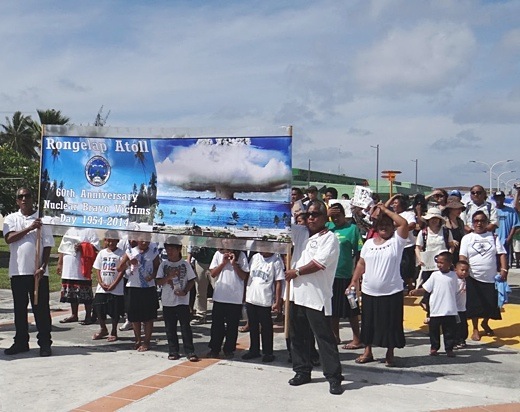

Image above: Islanders from nuclear weapons test-damaged Rongelap Atoll march on 1 March 2014 while holding banners marking the 60th anniversary of the Bravo hydrogen bomb test at Bikini Atoll in Majuro. Photo by Isaac Marty.From original article.

A dozen years before Jiji Jally was born in the Marshall Islands, the US conducted the Bravo test, the single largest above-ground nuclear detonation in the world.

The US’s nuclear bomb testing in the Marshall Islands amounted to the equivalent of detonating 1.6 Hiroshima bombs every single day for 12 years. The Bravo test on Bikini Atoll alone was the nuclear equivalent of more than 1,000 Hiroshima-sized bombs.

Jally’s family, like hundreds of others, has lived with the scars of this ever since.

“Everybody I know in the Marshall Islands has stories of cancer in their families,” Jally, who lives in Tumwater, Washington where she works as a court and medical interpreter, told Truthout.

Her brother died in 2012, leaving behind his wife and two young boys. Given that he died in the Marshall Islands, which lacks any facilities to diagnose and treat cancer, the cause of his death is unknown. But Jally explained that he had a tumor, and believes it was from cancer.

“Then my cousin passed a few years ago, who was in her mid-thirties,” she added. “And she died of breast cancer, and left three boys and a girl behind.”

For Jally, working as a medical interpreter highlighted the health care disparity her Marshall Islands community faces, even here in the US. She has therefore become an advocate for their right to health care.

“People from the Marshall Islands are moving out of there looking for healthcare,” Jally said. “But some of them come to Washington and are told they don’t qualify for health insurance or health care.

A Marshallese man in our community is undergoing chemo from his cancer that he got from the bombings, and now he has to stop his chemo because he can’t afford to continue the treatment. It’s really sad to me what we are having to go through just to get health care now, given what happened.”

The injustice of this is not lost on her or on others in her immediate community. However, most Americans have little understanding of what the US government has inflicted on the Marshallese people.

“The Cold War was not ‘cold’ for the Marshallese…it was hot,” Holly Barker, who is a professor at the University of Washington and a commissioner on the Republic of Marshall Islands National Nuclear Commission (a three-person commission with the goal of advancing nuclear justice for the Marshallese people), told Truthout.
“‘Cold’ communicates the privilege of being far from the testing locations and not having to live with firsthand experiences with nuclear weapons.”
President Donald Trump recently announced plans to remove the US from the Intermediate-Range Nuclear Forces (INF) Treaty with Russia, a move which many fear could ignite a new nuclear arms race. The INF had banned all short and mid-rang nuclear and non-nuclear missiles, and helped to eliminate thousands of land-based missiles. Trump has also promised to build new nuclear weapons.

As a deadly reminder of the lingering health impacts from nuclear weapons testing during the Cold War, untold numbers of Marshall Islands residents continue to seek healthcare, and justice, for having unwittingly been made human test subjects to nuclear tests.

According to Barker, multiple types of cancer continue to beset the Marshallese. Adequate healthcare might be a first step toward justice – but so far, that step is far from realized.

Marshall Islands' Cancer Rate "Extreme"
In 1947 the US made an agreement with the UN to create a strategic trusteeship territory across islands of Micronesia, an area covering three million square miles comprised of two thousand islands.

Just five days after obtaining the agreement with the UN, the US Atomic Energy Commission established what it called the Pacific Proving Grounds and shortly thereafter began testing nuclear weapons in the atmosphere and underwater across the region.

One-hundred-and-six tests over a dozen years were conducted, many of them extremely high yield. While the Marshall Islands testing were only 14% of all US nuclear tests, they comprised nearly 80% of the total nuclear yields detonated by the US.

Many Marshall Islands residents were exposed to radiation and nuclear fallout, and many of the islands remain contaminated to this day. Through the Radiation Exposure Compensation Act of 1990, money was paid to the Marshal Islanders as compensation for their exposure to the testing, but generations later the problem persists.

There are no exact numbers regarding how many people across the Marshall Islands were impacted, directly or indirectly, by the nuclear tests. Although the US government — like the governments of so many colonial powers — has minimized the consequences of its testing, its effects continue to this day.

“Does ‘affected’ mean those exposed to radioactive fallout, those whose land was vaporized and no longer exists on this planet?” Barker asked. “Is it people whose land will be contaminated for thousands of years into the future, is it the people whose chromosomes/DNA are mutated by the mutagenic properties of radiation?”

Barker, who has been studying the plight of the Marshallese for decades, admits that coming up with exact numbers is difficult and the numbers remain unknown.

“It is difficult because it plays into US efforts to minimize the numbers of people and islands whose health and land were damaged and injured by the testing program,” she said. “It is not just health and environmental damage, however. The political system was altered, the culture, the economy, and the language, among other things.”

In the late 1990s, a study published in Cancer, the journal of the American Cancer Society, found that cancer rates in the Marshall Islands, caused by the combination of exposure to nuclear test fallout, malnutrition, and other factors associated with the rapid westernization of their society, were “alarming,” according to the study.

Neal Palafox with the University of Hawaii’s John A. Burns Medical School, who authored the study along with four colleagues, told the media at the time the study was released that the incidence of cancer in the Marshall Islands was “extreme.”

The study compared the rate of various cancers found in the Marshallese to rates in the US. “Cancer incidence rates were higher in virtually every category in the Marshall Islands compared with the United States for the period 1985-1994,” the study said.

As just one example, the study found liver cancer rates in the Islands to be 15 times higher in males and 40 times higher in females compared to rates for those cancers in the US.

The study referenced the 67 nuclear tests conducted across the islands, and added that “increases in leukemia, breast cancer and thyroid cancer after radiation exposure have been well established, especially in childhood exposures.”
 
Erasing History
Rachael Hoffman, a Marshallese woman living in Everett, Washington, works with Barker in educating the public and younger generations about what the US government did in the Marshall Islands.

Every year she helps organize a Remembrance Day ceremony marking the March 1, 1954, detonation of the Bravo Bomb.

Her grandmother developed thyroid cancer that she attributes to the nuclear tests, and received some compensation from the government for it. With that money, she was able to move to the US, along with some of her relatives, during the 1980s.

“67 nuclear bombs were tested in the Marshall Islands in a 12-year span,” Hoffman told Truthout. “People were relocated from island to island, and to this day people remain displaced from nuclear testing.”

Hoffman discussed how the rapid westernization of the culture led to a poor diet taking a toll on the health of the Marshallese.

“During the testing a lot of the food was imported because people were overcrowded on these islands they were relocated to,” she explained. “The crops and fish were poisoned, so people couldn’t eat off the land, so they had to rely on canned food which caused high blood pressure, high cholesterol and diabetes.”

There were four main coral atolls of the Marshall Islands that were primarily impacted, and the people living on those have the highest numbers of cancer cases.

“These are the people who own the nuclear story because they are the ones facing the radiation directed illnesses and diseases and death that has come from all of this,” Hoffman said.

Today she works towards engaging younger people in the Marshallese community, both in the US and on the islands, “so they can know their story, know their history, otherwise that story will be lost.”

Hoffman said that is one of the main reasons she works annually to organize the Remembrance Day, so that these stories are not lost.

“The young people have no idea how bad the nuclear testing was that was done to our people,” Hoffman said, “because it’s definitely not taught in schools.”

Lack of Care
In the Marshall Islands, there is practically no medical diagnostic ability, no forensics, and not even an oncologist, according to Jally, Hoffman and Barker. This makes it challenging to find accurate numbers of cancer incidence.

“We know that many people died on the outer islands, for instance, with symptoms that sound like cancer,” Barker said. “Thyroid cancer, cervical cancer, breast cancer, lung cancer, colon cancer are all issues.”

Thomas Hamilton is an endocrinologist and thyroid disease specialist who did groundbreaking research on the impacts of the nuclear testing on the Marshall Islands community.

In a 1991 report he produced for Physicians for Social Responsibility, Hamilton stated, “The testing of nuclear weapons on these islands…has had profound direct and indirect effects on the health of the Marshall Islands residents as well as on their environment and culture.”

Hamilton concluded that the initial exposure of the Marshallese from the 1954 Bravo test “could probably have been prevented entirely or significantly reduced” by evacuating the residents prior to the test, as had been done prior to other tests; evacuating them immediately after the test; or at least postponing the detonation for when it was known the winds would not bring the fallout atop the Marshallese people.

The report points out that additional exposure could have been prevented by postponing the return of people who had been evacuated to the islands, or evacuating them again “when it was known that their body burdens of radionuclides were steadily increasing.”

Needless to say, the just, humanitarian and ethical thing for the US government to do would have been not to conduct nuclear testing in the region in the first place, let alone in an area where people lived.

The report was also critical of the US Department of Energy’s studies of the health impacts of the nuclear tests on the Marshallese, saying the DOE’s studies had “significant limitations.”

Hamilton told Truthout that his work studying the health impacts on the Marshallese from the nuclear tests “was not welcomed by the US government,” and pointed to the fact that as recently as 2013 a government study on the topic went to great lengths to invalidate the results of some his work.

While it has now been decades since Hamilton was deeply engaged in his studies of the testing’s health impacts on the Marshallese, he told Truthout that the findings of one of his studies, published in 1987, showed that the nuclear fallout went “quite a bit further” than the DOE had acknowledged.

“The Bravo test had an unexpected wind shift that caused heavy contamination in many atolls, but certainly on Rongelap Island, so those folks were allowed to stay where the fallout, which was like snow on the ground and kids were playing in it,” Hamilton said. “And it was two to three days before those people were evacuated.”

Hamilton added, “I was surprised in 2013 that they [US Government] mentioned my study, so they are somehow still concerned there’s an article out there saying their studies weren’t as complete as they should be.”

Meanwhile, Barker argues that, since the Marshall Islands was a US territory when the testing occurred, the Marshallese deserve the same standard of cancer care as Americans (at least those who can afford decent health insurance).

“But as it is, people have to leave the country and all that is familiar and comfortable to them at the time when they need the most support and comfort,” Barker said.

Meanwhile, like so many other Marshallese, Jally struggles to live with what was done to her people.

“I grew up there not knowing the history of our country,” she said. “I graduated high school and became a parent and didn’t really know the history until I started working with the community as a medical interpreter.”

Jally explained that her elders have spoken very emotionally of the bombings, telling her, “Yes, that happened to us and we lived through it.”

“The old folks watch these films about what happened and they tear up, and a lot of their families have died from cancer or because they are diabetic,” she concluded. “There is a lot of trauma in our community from this.”

.
Living in a Shitstorm

SUBHEAD: Get over despair. The big problems won't be fixed. A planetary adjustment is at hand.

By Chris Jordan on 17 October 2018 for Huffington Post -
(https://www.huffingtonpost.com/entry/despair-environment-politics_us_5bc5d910e4b0a8f17ee5d240)


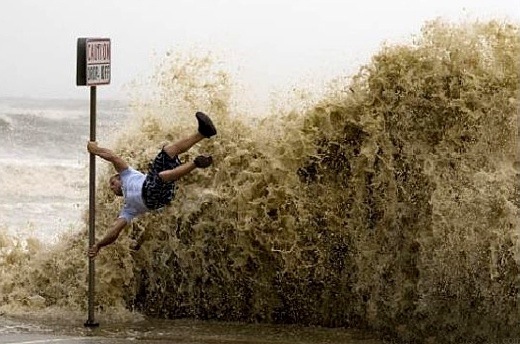
Image above: Man hanging onto "Caution" sign as braking storm wave breaks. From internet.

[IB Publisher's note: My advise to the author of this piece... Get over the despair. The big problems won't be fixed. A planetary adjustment is at hand. There is much work to be done by the survivors. Some places will be much safer than others. If you are not in one, find such a spot. Abandon your dependence on "The System" to a degree you never imagined (ditch the car,  the grid, discount retailing and the  information cloud as soon as possible. Hunker down with people you trust and can work or trade with. Entertain each other until the new dawn. P.S. This is the 7,000th post to this blog. Where does the time go?] 

Like all of you, I pay close daily attention to the increasingly grotesque environmental and political shitshow we are witnessing unfold before our astonished eyes. The question is how to respond.

I have never at the same time felt such a strong desire to make a positive difference and less empowered to do so.

In my own psyche, something has shifted on a foundational level.

Most conversations now, even among my wisest and most engaged friends, lead down familiar rabbit holes that end in shrugged shoulders, dumb jokes that mask disempowerment and worn out memes about “solutions” that are infinitesimal in proportion to the scale of the problems.

Ask young people what two words most characterize our future and the response is as instant as it is ubiquitous: “We’re fucked.”

The most relevant internet comment people seem to be able to muster is “vote,” which raises a whole separate conversation, but the crux for me is, “Of course ― and what else?” Politics is an increasing disaster that can be seen as both a cause and a symptom.

I try to step back to a meta-perspective in the hope of achieving a clearer-headed view, but the wide-angle picture becomes even more chaotic. The panopticon turns out to be a Halloween hall of mirrors.

And in this space I find myself steeped in the familiar feeling of dread that I had before going to Midway Island to photograph dead albatrosses whose stomachs are filled with plastic.

To take the next step forward, I know I must face something dark that lies inside of myself, but I can’t quite make out what it is ― something so taken for granted that I don’t see it, like the water we swim in, right in front of our nose but invisible.

Yet its presence is just strong enough to swing the needle of my internal compass in its direction.

The abyss I went to encounter on Midway was grief, which at the time I knew little about and thought was the scariest feeling there is to bear.

Now the form of a new monster emerges through the mist, a hundred times more frightening than grief, a lurking layer in the psyche that possesses the horrible power to drain individual and collective life force. It carries such strong cultural taboos that even naming it risks a kind of social suicide.

But I can no longer deny its residency in my consciousness, like a new roommate who showed up uninvited and now sleeps in my bed next to me and walks with me everywhere I go. I wonder if it accompanies you too. It is that state of mind we call despair.

On uttering the awful term, I realize I know barely anything about it. In my 14 years of individual and group therapy, I don’t recall any of the therapists or clients ever mentioning it, and I have rarely if ever read anything about it or heard discussion of it.

One thing I can observe about it right away is, in the same way I was grief averse, I am exponentially more despair averse. Admitting despair feels like surrendering the game for lost. An abhorrent kind of giving up seems to lie at its core.

At least grief expresses itself in the cathartic flow of tears, with the possibility of moving through to the other side.

Despair presents as an existential energy sink, like bleeding from an artery, a black hole that if approached pulls inescapably toward implosion and emotional collapse.

Acknowledging despair may amplify it, but denying it may feed it even more. The unconscious defense mechanism is avoidance:

Keep up a hopeful facade, say something positive, focus on trivia, talk about solutions, point to some small evidence of improvement somewhere, quote a self-help one-liner, any old cliche will do.

I wonder what it would mean to allow for some measure of despair as a natural response to the ever more fucked-up realities of our world.

Can despair be held and contained as a natural human experience alongside fear, anger, rage, grief, joy, beauty and love?

Or does it somehow diminish or cancel out everything else?

Perhaps there is something empowering and transformative that comes from standing in despair’s crucible.

Given we may create the very depression we fear by holding despair at bay, I want to know what happens if we take the risk of looking all the way into that darkness.

Let us consider the possibility that there may be value in exploring the territory of despair together, embracing it not as an exercise in negativity or capitulation but as a liberating doorway we can step through toward the healing of our relationship with each other and the world.

.

Race to mine the Pacific Ocean

SUBHEAD: Rare valuable minerals to be strip-mined from ocean floor by drones will endanger environment.

By Jon Letman on 29 August 2018 for National Geographic -
(https://www.nationalgeographic.com/environment/2018/08/news-race-to-mine-deep-sea-drones-seafloor-environmental-impact/)


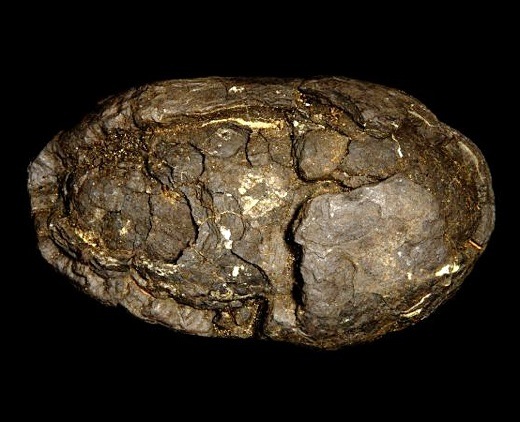
Image above: Polymetallic nodules like this one, made of layers of iron and manganese, sit on the deep seabed. Deep-sea mining companies are hunting for these nodules to use in the technology industry. From original article.

Closer than the moon, yet less well-mapped than Mars, the Earth’s seafloor is home to otherworldly creatures befitting a science fiction movie. Their remote habitat has caught the attention of humans, who are lining up to begin mining the bottom of the deep blue sea.

As technology and infrastructure drive the demand for minerals, and terrestrial resources grow harder to mine, the materials in the deep ocean are starting to look increasingly attractive to countries and companies.

“Deep-sea mining could end up having the largest footprint of any single human activity on the planet in terms of area of impact,” says University of Hawaii oceanographer Craig Smith.

It’s already underway: pioneer excavations in Papua New Guinea and Japan have taken advantage of advances in remotely operated vehicles, robotics, and communications technology to pioneer excavations. And companies like Lockheed Martin subsidiary UK Seabed Resources are eager to embark on a new deep-sea bonanza.

Over one million square miles of abyssal plain 12,000 to 18,000 feet deep is peppered with polymetallic nodules—vast fields of lumpy, black, potato-shaped mineral deposits.

Nodules range in size from a pea to a soccer ball and are rich in manganese, iron, copper, nickel, cobalt, and rare-earth elements, though they can take millions of years to grow a few millimeters.

The idea of mining these nodules, in part, led to the U.N. Convention on the Law of the Sea (UNCLOS) in 1982. It also resulted in the establishment of the International Seabed Authority (ISA) which oversees exploration claims in international waters.

Over half of those claims, some nearly 29,000 square miles in size, are in the Clarion-Clipperton Zone (CCZ), a region 75 percent as large as the continental United States that stretches some 3,000 miles across the equatorial eastern Pacific between Hawaii and Mexico. In total, the ISA recognizes 29 claims, although mining has yet to begin. Currently all activity in the CCZ is in the experimental or exploratory phase.

A reservoir for biodiversity


Craig Smith of the University of Hawaii recently led an expedition to study life on the seafloor in the western CCZ. “These are ecosystems that are counter-intuitive to us,” says Smith, describing an environment rich in biodiversity.

Smith explains that as many as half the animals living on top of nodules are related to the mineralogy. Mine those nodules, and you remove habitat for species before they’re even described.

Those creatures offer potential resources for pharmaceuticals and can provide new insights to how life begins. Smith calls them “the raw material for evolution.” But they evolved in waters as deep as 18,000 feet that are largely free of ocean currents or the light, vibration, and noise that would result from mining.

What’s more, mining will produce sediment plumes that may inhibit life on the seafloor and other habitats at varying depths.

“It’s recognized that this mining will inevitably impact very large areas of the seafloor,” Smith says, noting that modifying it could also have long-term impacts on how the ocean regulates the climate.

Carbon sequestration and the modulation of ocean acidity occur in the CCZ and elsewhere. Blanketing large areas of seafloor with sediment may affect the ocean’s ability to buffer against climate change.

“You can’t say that’s environmentally benign,” says Smith. “Society may decide it’s an acceptable impact given the tradeoffs, but it’s not benign.”

Smith argues that the time to establish protected areas and integrate them into deep-sea mining claim management is now. The seafloor, he notes, represents the largest ecosystems on the planet, adding, 
“It may be that Deep Sea Mining [DSM] can be done in a way that doesn’t cause species extinctions or major loss of ecosystem services, although we still don’t know enough to be able to say that.”
Others worry about the effects on humans. A UN resolution passed in the 1970s put deep-sea minerals in international waters outside the jurisdiction of any single country, limiting the power of countries—particularly island nations—that may see the most potent effects of pollution and marine debris.

“While the harmful effects of DSM on the marine environment are increasingly documented, far less attention is being paid to the potential effects of DSM on the human environment, specifically on the people living along the coast of Pacific Island nation-states,” says Julian Aguon, an environmental lawyer in Guam.

The unknown deep

Cindy Van Dover, a deep-sea biologist and professor at Duke University Marine Laboratory, and Daniel Dunn of Duke’s Marine Geospatial Ecology Lab are part of an international team that has developed guidelines to help the ISA establish a conservation strategy for deep-sea mining along the Atlantic Ridge and elsewhere.

Adopting a precautionary approach, they hope to see 30 to 50 percent of potential mining areas set aside as “no mine” zones to protect deep-sea biodiversity, while still allowing some mining.

“Our big concern is that we know so little about what’s happening in the deep sea and about the species down there,” says Dunn.

Without understanding the connectivity between species, both he and Van Dover warn of the risk of seriously damaging biodiversity.

“I’m not sure if we have an idea of how the industry is going to compensate for damage to the environment,” says Van Dover. “Because clearly it’s going to damage the environment.”
.

Less rats mean more birds and fish

SUBHEAD: Rodent eradication saves chicks and fertilizes soil and reefs for better biodiversity.

By Jan TenBruggencate on 6 July 2018 for Raising Islands -
(http://raisingislands.blogspot.com/2018/07/new-study-finds-rat-eradication.html)


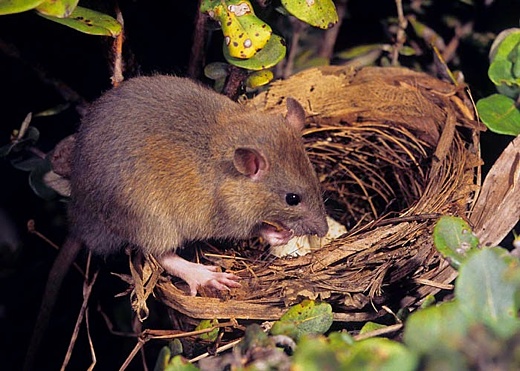
Image above: Rat in tree eating Hawaiian bird eggs. From (https://conservationbytes.com/2015/01/06/help-hawaiis-hyper-threatened-birds/).

If the rat eradication of Lehua Island (in Kauai County, Hawaii) ends up being successful, it could result in a more productive nearshore fishery.

Which is ironic, in that many of those fighting the eradication program were fishermen.

A new study in the journal Nature says that when rats kill off seabirds on islands, it means those birds are no longer pooping in the nearshore waters, fertilizing reefs. And that means fewer fish on those reefs.

This study was done in the Chagos Archipelago, where some islands have rats and others are rat-free. Researchers looked at both the fertility of the land on those islands and the productivity of their reefs, where erosion from the land would carry nutrients like bird-poop-sourced nitrogen.

The Chagos are atolls and reefs just south of the Equator in the Indian Ocean. Their ownership is disputed between Great Britain and Mauritius. One is Diego Garcia, which houses a U.S military base.

The results of the research were clear, said the authors, who are from Australian, British, Danish and Canadian research institutions.

On islands without rats, seabird density as well as nitrogen deposits were hundreds of times higher. Yes, hundreds: 250 to more than 700 times higher.

Those rat-free islands had reefs that had 48 percent more biomass of "macroalgae, filter-feeding sponges, turf algae and fish."

The researchers looked specifically at damselfish, and found that they both grew faster and had higher total biomass on the rat-free islands.

The theory, then, is that seabirds feed in the open ocean, deliver bird poop to the islands, and that the islands then feed the nearshore waters, which makes the waters more productive and capable of producing more fish.

"Rat eradication on oceanic islands should be a high conservation priority as it is likely to benefit terrestrial ecosystems and enhance coral reef productivity and functioning by restoring seabird-derived nutrient subsidies from large areas of ocean," the authors wrote.

Rats are not the only problems on islands. On Midway Atoll, near the western end of the Hawaiian archipelago, mice began eating seabirds after rats were removed from the islands there. The case of the vampire mice, which chewed into the necks of Laysan albatross, is reviewed here.

On other islands, the mice even seemed to be getting bigger on their diets of eggs and bird flesh. The Washington Post was among the many international publications that picked up the vampire mouse story.

All that said, rodents mainly go after eggs and chicks of nesting seabirds. That was the case at Lehua Island. Here is a description of the situation on the little island north of Ni`ihau before an application of a rodenticide to try to wipe out the rats.

"We found Wedge-tailed Shearwater and Red-tailed Tropicbird eggs broken open, the edges gnawed, the insides consumed. Tiny seabird chick bodies were commonplace–pulled out of burrows and half eaten.

This was particularly true for the diminutive Bulwer’s Petrel–the vast majority of Bulwer’s Petrel burrows we found had bits and pieces of chick inside," wrote Andre Raine, Project Manager for the Kauai Endangered Seabird Recovery Project.

A couple of months after the 2017 rat eradication effort at Lehua, Raine said he could clearly see the difference:

"Fat, healthy Wedge-tailed Shearwater chicks shuffled about in their burrows looking like animated fuzzballs. One of our burrow cameras showed a Bulwer’s Petrel chick exercising outside its burrow and actually fledging – a great omen, as this is something we have never recorded on our cameras in previous years," he wrote.

Most, but not all the rats were killed off at Lehua, and wildlife crews were back this year with rat-hunting dogs to try to kill off the survivors and protect the island's nesting seabird population.

And the island's coastal reefs and fisheries.
The removal of rats from islands is a major conservation effort. It has been done successfully at islands in Hawai`i like Mokoli`i off O`ahu and Mokapu off Molokai.

When it was accomplished at Palmyra Atoll south of the Hawaiian Islands, it had the unintended effect of killing off the disease-causing Asian tiger mosquito, which had depended on rats for blood meals. 
.

Fuck RIMPAC 2018!

SUBHEAD: These exercises are a colossal waste of resources and energy that only demonstrate America's suicidal death spiral. 

By Juan Wilson on 29 June 2018 for Island Breath -
(http://islandbreath.blogspot.com/2018/06/fuck-rimpac-2018.html)


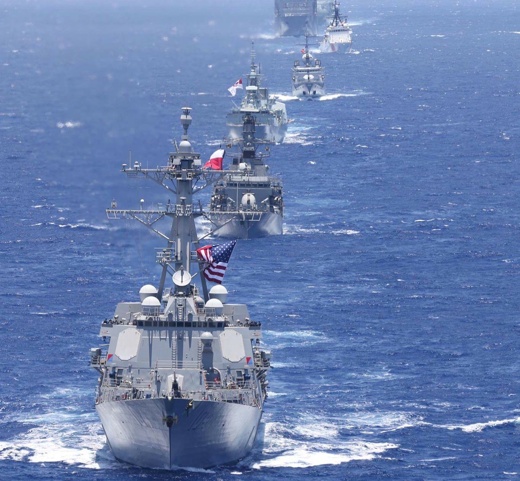
Image above: Naval participants on RIMPAC 2018 on parade for a photo op. From (https://news.usni.org/2018/06/26/rim-of-the-pacific-2018-participation).

For those that don't know RIMPAC is the U.S. Navy term for the "Rim of the Pacific. Evert two years the Navy puts together a nautical dog and pony show that they call RIMPAC "xxxx", where the "xxxx" is the even numbered year in which it takes place.

"Friendly" navy allies from nations proximate to the Pacific Ocean are invited to join the festivities on land, sea and in the air experimenting with new weapons systems, setting off explosives and coordinating he destruction of the planet Earth.

The US Navy likes to show its magnanimity by inviting "potential enemy" nations like China and Russia to join in as observers presumably to scare the crap out of them with the broad show of force. This also gives the nation the option of punishing an "enemy" observer nations with a dis-invitation if they do something we don't like.

This year China was dis-invited (https://www.militarytimes.com/news/your-military/2018/05/23/china-was-just-uninvited-from-rimpac-heres-why/) because it had the gall to continue to build up its presence in the South China Sea. Heaven forfend!

Well here we are again. This year is "RIMPAC 2018"... and it is going on now. Why "Fuck RIMPAC 2018!"? Because it is a costly public relations stunt that pollutes the ocean and kills uncounted numbers of sea creatures. Something we don't need any more of.

Through World War II to date the United States has dominated the Pacific Ocean through diabolic destruction with nuclear weapons and unfettered domination of island peoples. It is a disgusting display.

These RIMPAC war game are headquartered in Hawaii, with Pearl Harbor (on Oahu) and the Pacific Missile Range Facility (on Kauai) playing a major role.

If you don't think these "games" come at a cost to us living on Kauai you are dead wrong. Just go back to our post whale on pod stranding of a whale in Hanalei Bay in 2004 due to RIMPAC activities at the bottom of the list or articles below for a taste of the US Navy's games.

See also:
Ea O Ka Aina: Civil Beat views US military in Pacific 8/20/17
Ea O Ka Aina: "No!" to American Militarism 4/11/17
Ea O Ka Aina: DLNR responsibility on RIMPAC 7/6/16
Ea O Ka Aina: Participation in RIMPAC 2016 6/1/16
Ea O Ka Aina: Judgement against RIMPAC 2016 5/29/16
Ea O Ka Aina: Prepare for RIMPAC War in Hawaii 5/22/16
Ea O Ka Aina: Navy to "take" millions of mammals 5/1
Ea O Ka Aina: Judgement against RIMPAC 2016 4/3/16 
Ea O Ka Aina: Navy's "illegal" War Game 11/17/15
Ea O Ka Aina: US court RIMPAC Impact decision 4/3/15
Ea O Ka Aina: RIMPAC 2014 Impact Postmortem 10/22/14
Ea O Ka Aina: RIMPAC 2014 - another whale death 7/26/14
Ea O Ka Aina: RIMPAC 2014 in Full March 7/16/14
Ea O Ka Aina: 21st Century Energy Wars 7/10/14
Ea O Ka Aina: RIMPAC War on the Ocean 7/3/14
Ea O Ka Aina: Voila - World War Three 7/1/14
Ea O Ka Aina: The Pacific Pivot 6/28/14
Ea O Ka Aina: RIMPAC IMPACT 6/8/14
Ea O Ka Aina: RIMPAC Then and Now 5/16/14
Ea O Ka Aina: Earthday TPP Fukushima RIMPAC 4/22/14
Ea O Ka Aina: The Asian Pivot - An ugly dance 12/5/13
Ea O Ka Aina: Help save Mariana Islands 11/13/13
Ea O Ka Aina: End RimPac destruction of Pacific 11/1/13 
Ea O Ka Aina: Moana Nui Confereence 11/1/13
Ea O Ka Aina: Navy to conquer Marianas again  9/3/13
Ea O Ka Aina: Pagan Island beauty threatened 10/26/13
Ea O Ka Aina: Navy license to kill 10/27/12 
Ea O Ka Aina: Sleepwalking through destruction 7/16/12
Ea O Ka Aina: Okinawa breathes easier 4/27/12
Ea O Ka Aina: Navy Next-War-Itis 4/13/12
Ea O Ka Aina: America bullies Koreans 4/13/12
Ea O Ka Aina: Despoiling Jeju island coast begins 3/7/12
Ea O Ka Aina: Jeju Islanders protests Navy Base 2/29/12
Ea O Ka Aina: Hawaii - Start of American Empire 2/26/12
Ea O Ka Aina: Korean Island of Peace 2/26/12   
Ea O Ka Aina: Military schmoozes Guam & Hawaii 3/17/11
Ea O Ka Aina: In Search of Real Security - One 8/31/10
Ea O Ka Aina: Peace for the Blue Continent 8/10/10
Ea O Ka Aina: Shift in Pacific Power Balance 8/5/10
Ea O Ka Aina: RIMPAC to expand activities 8/3/10
Ea O Ka Aina: RIMPAC War Games here in July 6/20/10
Ea O Ka Aina: Pacific Resistance to U.S. Military 5/24/10
Ea O Ka Aina: Guam Land Grab 11/30/09
Ea O Ka Aina: Guam as a modern Bikini Atoll 12/25/09
Ea O Ka Aina: GUAM - Another Strategic Island 11/8/09
Ea O Ka Aina: Diego Garcia - Another stolen island 11/6/09
Ea O Ka Aina: DARPA & Super-Cavitation on Kauai 3/24/09
Island Breath: RIMPAC 2008 - Navy fired up in Hawaii 7/2/08
Island Breath: RIMPAC 2008 uses destructive sonar 4/22/08
Island Breath: Navy Plans for the Pacific 9/3/07
Island Breath: Judge restricts sonar off California 08/07/07
Island Breath: RIMPAC 2006 sonar compromise 7/9/06
Island Breath: RIMPAC 2006 - Impact on Ocean 5/23/06
Island Breath: RIMPAC 2004 - Whale strandings on Kauai 9/2/04
.

Hold Dear the Lamp Light

SUBHEAD: Our lives when we were young, before the tides rose up and the power went out.

By Jay Ruben Dayrit on 13 December 2016 for Wired Magazine -
(https://www.wired.com/2016/12/jay-dayrit-hold-dear-the-lamp-light/)


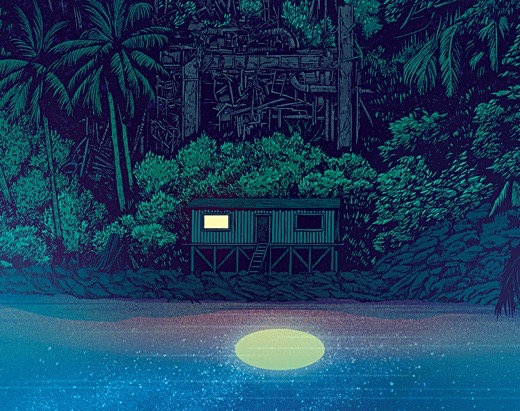
Image above: Illustration for story by Kevin Tong. From original article.

The year Jojo and I started eighth grade, the power plant officially cut electricity to two hours a day. We’d already been through years of brownouts, of flickering lights, blinking monitors, older ag drones without artificial neural networks rebooting in their stations and randomly launching to spray the fields again or overfeed the chickens.

So when Public Works & Electric issued a message to all our devices telling us about its irregular hours of operation, no one was surprised. The message was full of obfuscating language, but anyone with a tide chart could spot the correlation.

Anyone driving down the causeway to the airport, past the power plant, could see through its chain-link fence the turbines standing silent, tense as raised shoulders; the grounds swamped in seawater, the ebbing tide dragging out an iridescent Rorschach of petroleum.

A year before, the garbage dump had had to be relocated, a comparatively easier undertaking, after disposable diapers and plastic bottles began washing ashore on what was left of Ant Atoll, which had already lost its status as the premier diving destination for the Chinese.

The imminent blackouts stirred little protest from a population accustomed to making do. Aging water pipes had given rise to improvised cisterns situated at the eaves of every house.

Unreliable supply chains necessitated that we all have competence in maintaining our equipment. Mother Necessity knows how to weld with a zip tie, patch with duct tape, and repurpose a soda can.

Our father took Jojo and me, along with a box of winged beans, bitter melon, and a dozen eggs, over to Bauer’s Hardware. He and Friedrich Bauer had been tennis buddies before the tractor accident. Back then the hospital was even less equipped to handle emergencies, and Friedrich died before he could be medevaced to Guam.

The produce was for Yessica, who had taken over the hardware store. In return, she discounted the Coleman lantern and three bags of charcoal, throwing in a 10-pack of Diamond Strike matches for free. She marveled at how tall Jojo and I had grown but confessed she still couldn’t tell us apart.

Our father placed his hand on my brother’s shoulder. “Joseph here is interested in civil engineering. Alejandro, medicine,” he said, as if we’d come up with these ideas on our own. “They’ll be going to Central Pacific next year.”

Yessica’s smile couldn’t mask the flutter of melancholy in her eyes. Friedrich had graduated from there. Anyone from Micronesia who went to Hawaii for school attended Central Pacific High School.

Its boarding program had gained a reputation for welcoming students from other islands like the Marshalls and Pingelap, lower-lying atolls that had all but disappeared.

When the Office of Insular Affairs renewed the Compact of Free Association for the second time, the penultimate wave of Micronesians arrived in Hawaii, seeking access to better education, jobs, and health care, especially for the blood-borne cancers and autoimmune disorders that were still persistent three generations after nuclear testing.

With that influx into Hawaii came a resurgence of housing and job discrimination, racial tension, and violence.

We’d heard that the faculty at Central Pacific encouraged empathy between Hawaiians and Micronesians, highlighting cultural commonalities like celestial navigation and traditional dances. But the fact that there wasn’t a lot of bullying, we knew, had more to do with safety in numbers.

A few friends who were home for the summer had reassured Jojo and me we’d be OK, because we were Filipinos who sounded American. With our straight hair and lighter skin, we could pass. Still, we were told to learn how to block a punch.

Better yet, learn how to throw one. Jojo and I practiced in our bedroom, aiming for the shoulder, where the sleeves of our T-shirts concealed the bruises that might betray to our parents how we were preparing for high school.

After returning from the hardware store, Jojo and I helped our mother empty the refrigerator, defrost the freezer, and scrape the barbecue grill. She marinated all the meat in soy sauce, calamansi juice, and garlic.

Our father threw pork chops and steaks on the grill, but we all felt decadent eating so much red meat. And our mother worried about gout, to which Filipinos were predisposed. She rattled off the names of five of our uncles back in Pampanga as evidence.

So we gave the excess thawed meat to our neighbors. The house down the road was owned by the hospital and, over the years, was home to a string of American doctors offsetting their excessive student loans by practicing in underserved countries.

Dr. Westlake and Dr. Phan, two female residents who enjoyed throwing cocktail parties, happily accepted the food. Up the road, the McGuires, who were from New Zealand, insisted our generosity was too much. They eventually relented, because our mother refused to take no for an answer.

They had a son our age, Derek, whose company Jojo and I didn’t particularly enjoy. Whenever there was electricity, he’d run through the break in the gardenia hedge that separated our properties and challenge us to new games his parents let him download freely.

He knew our cross-platform visors were a generation older and glitchier, that invariably we’d lose. “I win, again!” Derek would cheer behind his visor.

Jojo and I would remove ours and exchange glances, consoled in knowing an only child needs to feel good about something.

Surely our parents found the rationed power supply inconvenient: driving to the fish market every day, cooking rice over an open flame, taking the clothes off the line so they wouldn’t reek of lighter fluid. But Jojo and I recall the blackouts fondly.

We remember our whole neighborhood, just a scattering of houses along a gravel road, smelling of barbecued chicken and fish. We remember eating grilled corn and eggplant with bagoong.

We remember Auntie Betina arriving for dinner with a Folger’s coffee can of chocolate ­chip cookies she’d somehow managed to bake in the brief window of electricity that day.

We remember pink sunsets stretching across the sky, families in their backyards, laughter carried by the breeze in the waning sunlight. We remember the Coleman lantern, how its mantle, little more than an ashen net the shape of an infant’s sock, cast a steady light against the back of the house. Our shadows, sharp as paper cutouts, slid across the wall as we helped ourselves to seconds.

We took leisurely family walks after dinner. “An evening constitutional,” as our father called it, evoking an era when people said things like that. No porch lights to mark our path, not even the bluish glow of our devices, which we stowed to conserve battery power while the networks were down. The moon illuminated the road well enough.

We stopped to talk to other people strolling after dinner, mostly Filipinos who lived in the neighborhood.

The men crossed their arms atop full bellies, discussing local politics and the precarious economy. The women gossiped about recent expats from the Philippines—who was single, who wasn’t but acted as if they were.

Back home, by the light of the Coleman, our father, who could not be bothered with fiction, read biographies. Our mother read pulpy detective novels. Since the blackouts, she and her friends had started a book exchange that quickly extended beyond the Filipinas to the Americans, the Australians, even the Japanese.

Jojo picked up The Serrano Trilogy again, which he’d attempted to read several times in the past but had always abandoned for his visor and its less challenging entertainment.

Never much of a reader myself, I opted to flip through National Geographic, unfolding maps of faraway places, studying borders that would have to be redrawn sooner than any of us expected.

Before our predicament was overshadowed by the mass evacuations of Shanghai, Amsterdam, and America’s coastal cities to higher ground; before the famine conflicts spilled over from Africa to the Middle East; before Micronesia’s depleted population eventually triggered its economic collapse and the expats, our parents included, retreated to inner regions of their own countries; before all those major catastrophes, we had the blackout years.

Now I hold dear the lamplight and the rustle of paper at our fingertips, our parents reading passages aloud, being together in the darkness.

That first year, Jojo and I came to believe we could easily live without electricity.

But we were children and our beliefs unrealistic, like the plan to relocate the power plant before it and everything else succumbed to the sea.
.

Fukushima to poison Pacific more

SUBHEAD: Tepco plans to dump a million tons of radioactive nuclear water in ocean.

By Admin on 27 November 2017 for ENE News -
(http://enenews.com/ap-japan-poised-to-flood-pacific-with-1-million-tons-of-nuclear-water-contaminated-by-fukushima-newsweek-experts-want-japan-to-push-a-million-tons-of-radioactive-water-into-ocean-relea)


Image above: Some of the many prefab tanks erected by Tepco to temporarily store radioactive water contaminated when it was used to cool molten reactor cores at the destroyed Fukushima Daiichi Nuclear Power Plant in eastern Japan. From (https://blogs-images.forbes.com/jamesconca/files/2017/11/Fukushima-tanks.jpg).

Associated Press, Nov 26, 2017: Japan is poised to flood the Pacific with one million tons of nuclear water contaminated by the Fukushima power plant

The Japanese government is being urged by experts to gradually release radioactive water in to the Pacific Ocean…

 The water is stored on site in around 900 large and densely packed tanks and could spill should another major disaster strike. The government has been urged to release the water into the ocean…

Local fishermen are extremely hesitant to this solution…

Fumio Haga, a drag-net fisherman, said: ‘People would shun Fukushima fish again as soon as the water is released.’…

Newsweek, Nov 25, 2017:  
Experts Want Japan To Push A Million Tons Of Radioactive Water Into the Pacific Ocean… 

The government has been urged by experts to gradually release the water to the Pacific Ocean…

Associted Press, Nov 27, 2017:  
Fukushima meltdown: Japan urged to dump radioactive waste in Pacific Ocean by nuclear experts; Nation at a loss with how to dispose of tanks of toxic matter left over from 2011 disaster… 

Experts advising the government have urged a gradual release to the nearby Pacific Ocean… Local fishermen are baulking. The water, no matter how clean, has a dirty image for consumers, they say…

The fishermen fear any release would sound the death knell for their nascent and still fragile recovery…

The amount of radioactive water at Fukushima is still growing, by 150 tonnes a day. The reactors are damaged beyond repair, but cooling water must be constantly pumped in to keep them from overheating. That water picks up radioactivity before leaking out of the damaged containment chambers and collecting in the basements…

 “Our recovery effort up until now would immediately collapse to zero if the water is released,” Iwaki abalone farmer Yuichi Manome said…

Metro.co.uk, Nov 27, 2017: 
Japan could pump 1,000,000 tons of radioactive water into the sea from Fukushima — 

More than six years after a tsunami devastated Japan’s west coast and overwhelmed the Fukushima nuclear power plant it has been revealed radioactive water could be pumped into the sea…

Experts have advised the government to carry out a gradual release into the Pacific Ocean…

Fishermen are still trying to recover from the disaster but the release of water could kill the industry…

See also:
Ea O Ka Aina: Fukushima Coverup 11/14/17
Ea O Ka Aina: Fukushima Hot particle update 7/27/17
Ea O Ka Aina: E-Fukushima bosses on trial 6/25/17
Ea O Ka Aina: Tepco plan to dump tainted water 7/14/17
Ea O Ka Aina: Stop Fukushima as Olympic venue 5/10/17
Ea O Ka Aina: Continuing Fukushima danger 4/14/17
Ea O Ka Aina: Stop Fukushima as Olympic venue 4/8/17 
Ea O Ka Aina: Fukushima worse than ever 2/5/17
Ea O Ka Aina: Fukushima radiation on West Coast 1/13/17
Ea O Ka Aina: Fukushima cleanup cost to double 12/9/16
Ea O Ka Aina: Tokyo damaged by nuclear pellet rain 9/24/16
Ea O Ka Aina: Nuclear Power and Climate Failure 8/24/16
Ea O Ka Aina: High radioactivity in Tokyo 8/22/16
Ea O Ka Aina: Nuclear Blinders 8/18/16
Ea O Ka Aina: Fukushima and Chernobyl 5/29/16
Ea O Ka Aina: Fukushima radiation damages Japan 4/14/16
Ea O Ka Aina: Fukushima's Nuclear Nightmare 3/13/16
Ea O Ka Aina: Fifth Fukushima Anniversary 3/11/16
Green Road Jounral: Balls filled with Uranium, Plutonium 2/19/16
Ea O Ka Aina: Fukushima impacts are ongoing 11/8/15
Ea O Ka Aina: Petroleum and Nuclear Coverups 10/21/15
Ea O Ka Aina: Fukushima Radiation Contamination 10/13/15
Ea O Ka Aina: Radioactive floods damage Japan 9/22/15
Ea O Ka Aina: Fir trees damaged by Fukushima 8/30/15
Ea O Ka Aina: Japan restarts a nuclear plant 8/11/15
Ea O Ka Aina: Fukushima disaster will continue 7/21/15
Ea O Ka Aina: Too many fish in the sea? 6/22/15
Ea O Ka Aina: Fukushima prefecture uninhabitable 6/6/15
Ea O Ka Aina: In case you've forgotten Fukushima 5/27/15
Ea O Ka Aina: Radiation damages top predator bird 4/24/15
Ea O Ka Aina: Fukshima die-offs occurring 4/17/15
Ea O Ka Aina: Fukushima Impact Update 4/13/15
Ea O Ka Aina: Fukushima - the end of atomic power 3/13/15
Ea O Ka Aina: Where is the Fukushima Data? 2/21/15
Ea O Ka Aina: Fuku-Undo 2/4/15
Ea O Ka Aina: Fukushima MOX fuel crossed Pacific 2/4/15
Ea O Ka Aina: Fukushima worst human disaster 1/26/15
Ea O Ka Aina: Japan to kill Pacific Ocean 1/23/15
Ea O Ka Aina: Japan's Environmental Catastrophe 8/25/14
ENE News: Nuclear fuel found 15 miles from Tokyo 8/10/14
Ea O Ka Aina: Earthday TPP Fukushima RIMPAC 4/22/14
Ea O Ka Aina: Fukushima Daiichi hot particles 5/30/14
Ea O Ka Aina: Japanese radiation denial 5/12/14
Ea O Ka Aina: Entomb Fukushima Daiichi now 4/6/14
Ea O Ka Aina: Fukushima Disaster 3 Years Old 4/3/14
Ea O Ka Aina: Tsunami, Fukushima and Kauai 3/9/14
Ea O Ka Aina: Japanese contamination 2/16/14
Ea O Ka Aina: Bill for Fukushima monitoring 2/9/14
Ea O Ka Aina: Tepco under reporting of radiation 2/9/14
Ea O Ka Aina: Fukushima Fallout in Alaska 1/25/14
Ea O Ka Aina: Fukushima engineer against nukes 1/17/14
Ea O Ka Aina: California to monitor ocean radiation 1/14/14
Ea O Ka Aina: Demystifying Fukushima Reactor #3 1/1/14
Ea O Ka Aina: US & Japan know criticality brewing 12/29/13
Ea O Ka Aina: Fukushima Forever 12/17/13
Ea O Ka Aina: Brief radiation spike on Kauai 12/27/13
Ea O Ka Aina: USS Ronald Reagan & Fukushima 12/15/13
Ea O Ka Aina: Fukushima Pacific Impact 12/11/13
Ea O Ka Aina: Berkeley and Fukushima health risks 12/10/13
Ea O Ka Aina: Madness engulfs Japan 12/4/13
Ea O Ka Aina: Edo Japan and Fukushima Recovery 11/30/13
Ea O Ka Aina: Reaction to Fukushima is Fascism 11/30/13
Ea O Ka Aina: Radioisotopes in the Northern Pacific 11/22/13
Ea O Ka Aina: Fukushima cleanup in critical phase 11/18/13
Ea O Ka Aina: Fukushima fuel removal to start 11/14/13
Ea O Ka Aina: Fukushima, What me worry? 11/13/13
Ea O Ka Aina: Remove other Fukushina fuel 10/29/13
Ea O Ka Aina: End to Japanese Nuclear Power? 10/3/13
Ea O Ka Aina: Fukushima & Poisoned Fish 10/3/13
Ea O Ka Aina: Fuel Danger at Fukushima 9/27/13
Ea O Ka Aina: Reactor #4 Spent Fuel Pool 9/16/13
Ea O Ka Aina: Fukushima is Not Going Away 9/9/13
Ea O Ka Aina: X-Men like Ice Wall for Fukushima 9/3/13
Ea O Ka Aina: Fukushima House of Horrors 8/21/13
Ea O Ka Aina: Fukushima Apocalypse 8/21/13
Ea O Ka Aina: Fukushima Radioactive Dust 8/20/13
Ea O Ka Aina: Cocooning Fukushima Daiichi 8/16/13
Ea O Ka Aina: Fukushima radiation coverup 8/12/13
Ea O Ka Aina: Leakage at Fukushima an emergency 8/5/13
Ea O Ka Aina: Fukushima burns on and on 7/26/13
Ea O Ka Aina: What the Fukashima? 7/24/13
Ea O Ka Aina: Fukushima Spiking 7/15/13
Ea O Ka Aina: G20 Agenda Item #1 - Fix Fukushima 7/7/13
Ea O Ka Aina: Fukushima and hypothyroid in Hawaii 4/9/13
Ea O Ka Aina: Japan to release radioactive water 2/8/13
Ea O Ka Aina: Fukushima as Roshoman 1/14/13
Ea O Ka Aina: Fukushia Radiation Report 10/24/12
Ea O Ka Aina: Fukushima Fallout 9/14/12
Ea O Ka Aina: Fukushima Unit 4 Danger 7/22/12
Ea O Ka Aina: Fukushima denial & extinction ethics 5/14/12
Ea O Ka Aina: Fukushima worse than Chernobyl 4/24/12
Ea O Ka Aina: Fukushima dangers continue 4/22/12
Ea O Ka Aina: Fukushima children condemned 3/8/12
Ea O Ka Aina: Fukushima fights chain reaction 2/7/12
Ea O Ka Aina: Tepco faking Fukushima fix 12/24/11
Ea O Ka Aina: The Non Battle for Fukushima 11/10/11
Ea O Ka Aina: Fukushima Debris nears Midway 10/14/11
Ea O Ka Aina: Fukushima Radiation Danger 7/10/11
Ea O Ka Aina: Fukushima Abandoned 9/28/11
Ea O Ka Aina: Deadly Radiation at Fukushima 8/3/11
Ea O Ka Aina: Fukushima poisons Japanese food 7/25/11
Ea O Ka Aina: Black Rain in Japan 7/22/11
Ea O Ka Aina: UK PR downplays Fukushima 7/1/11
Ea O Ka Aina: Fukushima #2 & #3 meltdown 5/17/11
Ea O Ka Aina: Fukushima sustained chain reaction 5/3/11
Ea O Ka Aina: Ocean Radioactivity in Fukushima 4/16/11
Ea O Ka Aina: Japan raises nuclear disaster level 4/12/11
Ea O Ka Aina: Fukushima No Go Zone Expanding 4/11/11
Ea O Ka Aina: Fukushima to be Decommissioned 4/8/11
Ea O Ka Aina: Fukushima Poisons Fish 4/6/11
Ea O Ka Aina: Learning from Fukushima 4/4/11
Ea O Ka Aina: Fukushima Leak goes Unplugged 4/3/11
Ea O Ka Aina: Stick a fork in it - It's done! 4/2/11
Ea O Ka Aina: Fukushima reactors reach criticality 3/31/11
Ea O Ka Aina: Fukushima Non-Containment 3/30/11
Ea O Ka Aina: Fukushima Meltdown 3/29/11
Ea O Ka Aina: Fukushima Water Blessing & Curse 3/28/11 
.

Civil Beat views US military in Pacific

SUBHEAD: Will a military buildup in far-flung Pacific island territories destroy their unique environment?

By Juan Wilson on 20 August 2017 for Island Breath -
(http://islandbreath.blogspot.com/2017/08/civil-beat-views-us-military-in-pacific.html)


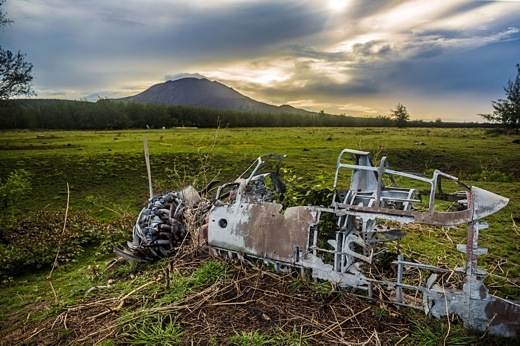
Image above: Phboto of WWII military plane wreck on Pagan Island. the island is now to be used by American forces for target practice. (http://www.civilbeat.org/2016/12/can-these-islands-survive-americas-military-pivot-to-asia/).

Civil Beat is a Hawaiian news agency that has done an excellent job in investigating a wide range of interests throughout the Hawaiian Islands. It stands head and shoulders above the pathetic efforts of the Garden Island News (owned by the Honolulu Star-Advertiser which is owned by a Canadian corporation Black Press).

Civil Beat is a 501(c)3 tax-exempt news organization dedicated to cultivating an informed body of citizens, all striving to make Hawaii a better place. It uses local reporters and covers local, national and international issues. It is one of the few online news sites IslandBreath supports with donations.

Civil Beat has made an important contribution to a better understanding of American military domination in the Pacific. That imperial effort goes back to the Spanish American War and the takeover of Hawaii and continues to this day. 

Civil Beat has put together several articles in one place called Outpost Pacific (http://www.civilbeat.org/projects/pacific-outpost/) covering issues on the Mariana Islands with specific pieces on Pagan Island, Tinian Island, Guam and Farallon de Medinilla.

Already plans for  RIMPAC 2018 are racing ahead. Those are the Rim of the Pacific war games conducted by the US Navy every even numbered year in and around Hawaii that includes more than a dozen navies.

Kauai's Pacific Missile Range Facility (PMRF) and Makaha Ridge Tracking Facility play a large part in those war games and any real war in the Pacific. That makes Kauai, and those other strategic islands occupied by the US military ground zero for any major conflict involving China, North Korea or Russia.

See:
Civil Beat Chapter 1: Can These Islands Survive America’s Military Pivot To Asia?
Civil Beat Chapter 2: The Fight To Save Pagan Island From US Bombs
Civil Beat Chapter 3: Tinian - "We believed in America"
Civil Beat Chapter 4: Guam - Many In This Military Outpost Welcome More Troops
Civil Beat Chapter 5: Missing Data Plagues Military Training Plans In The Marianas

See also:

Ea O Ka Aina: South Korea's stubborn Peace Effort 8/4/17
Ea O Ka Aina: "No!" to America Militrarism in Hawaii 4/11/17
Ea O Ka Aina: Air Force plans to bomb whales 2/6/17
Ea O Ka Aina: MV-22 Osprey landing at Salt Pond 2/5/17
Ea O Ka Aina: Kauai and Niihau endangered 9/24/16 
Ea O Ka Aina: DLNR responsibility on RIMPAC 7/6/16
Ea O Ka Aina: Oceans4Peace Pacific Pivot Panel 6/18/16
Ea O Ka Aina: Ocean 4 Peace Events 6/11/16
Ea O Ka Aina: Prepare for RIMPAC 2016 War in Hawaii 5/22/16
Ea O Ka Aina: Navy to "take" millions of mammals 5/17/16
Ea O Ka Aina: US court RIMPAC Impact decision 4/3/15
Ea O Ka Aina: RIMPAC 2014 Impact Postmortem 10/22/1
Ea O Ka Aina: Marines backing off 8/24/12
Ea O Ka Aina: Unproved Osprey on Kauai 8/21/12
Ea O Ka Aina: RIMPAC 2014 in Full March 7/16/14
Ea O Ka Aina: 21st Century Energy Wars 7/10/14
Ea O Ka Aina: RIMPAC War on the Ocean 7/3/14
Ea O Ka Aina: Voila - World War Three 7/1/14
Ea O Ka Aina: The Pacific Pivot 6/28/14
Ea O Ka Aina: RIMPAC IMPACT 6/8/14
Ea O Ka Aina: RIMPAC Then and Now 5/16/14
Ea O Ka Aina: Earthday TPP Fukushima RIMPAC 4/22/14
Ea O Ka Aina: The Asian Pivot - An ugly dance 12/5/13
Ea O Ka Aina: Help save Mariana Islands 11/13/13
Ea O Ka Aina: End RimPac destruction of Pacific 11/1/13 
Ea O Ka Aina: Moana Nui Confereence 11/1/13
Ea O Ka Aina: Navy to conquer Marianas again  9/3/13
Ea O Ka Aina: Pagan Island beauty threatened 10/26/13
Ea O Ka Aina: Navy license to kill 10/27/12 
Ea O Ka Aina: Sleepwalking through destruction 7/16/12
Ea O Ka Aina: Okinawa breathes easier 4/27/12
Ea O Ka Aina: Navy Next-War-Itis 4/13/12
Ea O Ka Aina: America bullies Koreans 4/13/12
Ea O Ka Aina: Despoiling Jeju island coast begins 3/7/12
Ea O Ka Aina: Jeju Islanders protests Navy Base 2/29/12
Ea O Ka Aina: Hawaii - Start of American Empire 2/26/12
Ea O Ka Aina: Korean Island of Peace 2/26/12   
Ea O Ka Aina: Military schmoozes Guam & Hawaii 3/17/11
Ea O Ka Aina: In Search of Real Security - One 8/31/10
Ea O Ka Aina: Peace for the Blue Continent 8/10/10
Ea O Ka Aina: Shift in Pacific Power Balance 8/5/10
Ea O Ka Aina: RimPac to expand activities 6/29/10
Ea O Ka Aina: RIMPAC War Games here in July 6/20/10
Ea O Ka Aina: Pacific Resistance to U.S. Military 5/24/10
Ea O Ka Aina: De-colonizing the Pacific 5/21/10
Ea O Ka Aina: RIMPAC to Return in 2010 5/2/10
Ea O Ka Aina: Living at the Tip of the Spear 4/5/10
Ea O Ka Aina: Living at the Tip of the Spear 4/15/10
Ea O Ka Aina: Guam Land Grab 11/30/09
Ea O Ka Aina: Guam as a modern Bikini Atoll 12/25/09
Ea O Ka Aina: GUAM - Another Strategic Island 11/8/09
Ea O Ka Aina: Diego Garcia - Another stolen island 11/6/09
Ea O Ka Aina: DARPA & Super-Cavitation on Kauai 3/24/09
Island Breath: RIMPAC 2008 - Navy fired up in Hawaii 7/2/08
Island Breath: RIMPAC 2008 uses destructive sonar 4/22/08
Island Breath: Navy Plans for the Pacific 9/3/07
Island Breath: Judge restricts sonar off California 08/07/07
Island Breath: RIMPAC 2006 sonar compromise 7/9/06
Island Breath: RIMPAC 2006 - Impact on Ocean 5/23/06
Island Breath: RIMPAC 2004 - Whale strandings on Kauai 9/2/04
Island Breath: PMRF Land Grab 3/15/04 


.